The Supreme Court on February 9, 2026, dismissed as time-barred a Special Leave Petition filed by the State of Odisha challenging the Orissa High Court’s refusal to condone an inordinate delay in pursuing an appeal against a grant-in-aid order passed in favour of a school.
Holding the State’s explanation to be “not an explanation but a lame excuse,” the Court declined to exercise discretion under Section 5 of the Limitation Act, 1963.
- Case Title: State of Odisha & Ors. v. Managing Committee of Namatara Girls High School
- Court: Supreme Court of India
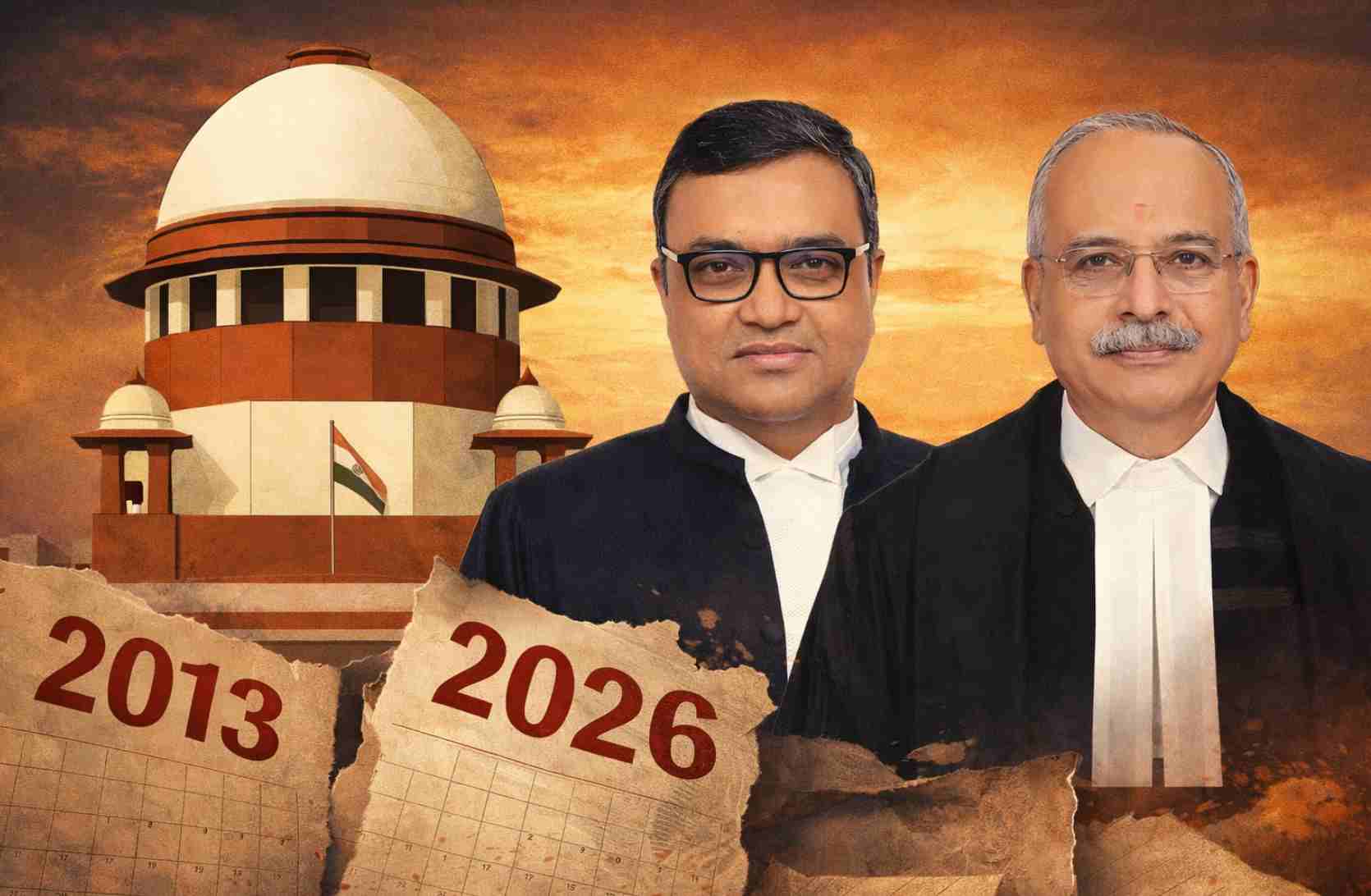
- Coram: Justice Dipankar Datta and Justice Satish Chandra Sharma
- Date of Judgment: February 09, 2026
- Citation: 2026 INSC 148
- Jurisdiction: Civil Appellate Jurisdiction, Special Leave Petition (C) Diary No. 54941/2025
Case Background
The litigation originated from an application filed by the Managing Committee of Namatara Girls’ High School before the State Education Tribunal, Bhubaneswar, under Section 24B of the Odisha Education Act, 1969, seeking release of grant-in-aid.
The Tribunal, by order dated December 30, 2013, allowed the application and directed the State of Odisha and the Director of Secondary Education to release grant-in-aid to the teaching and non-teaching staff of the school.
The State carried the matter in appeal before the High Court of Orissa at Cuttack on October 16, 2015. However, the appeal was time-barred and was not accompanied by a certified copy of the Tribunal’s order.
Crucially, for nearly eight years after filing the appeal, the State failed to place the certified copy on record. On April 26, 2023, the High Court dismissed the appeal on the ground that the certified copy had not been filed.
Subsequently, the State obtained the certified copy only on February 13, 2024. A recall application was filed along with an application seeking condonation of 291 days’ delay.
On February 21, 2025, the High Court rejected the condonation plea, observing that the appeal itself was inherently defective and that the delay in presenting it exceeded eleven years. The recall application was accordingly dismissed as time-barred.
Special Leave Petition and Further Delay
Challenging the High Court’s February 21, 2025 order, the State approached the Supreme Court. However, there was a further delay of 123 days in filing the Special Leave Petition and an additional delay of 96 days in re-filing it after curing defects.
The State sought to justify the delay by stating that the matter was considered and sent to the Law Department, which opined that it was a fit case for filing the SLP.
The delay was attributed to “procedural delay in obtaining approval from the higher authority,” asserting that it was neither deliberate nor intentional.
Supreme Court’s Observations on “Sufficient Cause”
The Bench initially began dictating an order dismissing the SLP. Upon request from the State’s counsel to withdraw the petition, the Court recorded such withdrawal.
However, when counsel later sought recall of the dismissal order and requested a reasoned decision, the Court recalled its withdrawal order and instead dismissed the petition as time-barred, reserving reasons to follow.
Delivering detailed reasons, the Court held:
“No cause, much less sufficient cause, has been shown for exercise of discretion in favour of the State of Odisha. The nature of explanation in the application for condonation of delay is such that with much ado, the proceedings could be closed.”
While acknowledging the long line of precedents advocating a liberal approach when the State seeks condonation of delay, the Bench undertook an extensive review of jurisprudence on Section 5 of the Limitation Act.
Katiji and Ramegowda
The Court referred to Collector, Land Acquisition, Anantnag v. Mst Katiji (1987) and G. Ramegowda v. Land Acquisition Officer (1988), where a justice-oriented and liberal approach toward governmental delay had been endorsed.
In Ramegowda, the Court had recognized that government decisions are “collective and institutional decisions” encumbered by procedural red tape and that “a certain amount of latitude is, therefore, not impermissible.”
The Bench quoted the observation that:
“When substantial justice and technical considerations are pitted against each other, cause of substantial justice deserves to be preferred…”
However, the Court also emphasized that even those earlier judgments acknowledged limits to such latitude.
Shift Towards a Stricter Approach
The judgment noted that in recent years, a stricter approach has emerged. It cited decisions such as Postmaster General v. Living Media India Limited (2012), University of Delhi v. Union of India (2020), and Pathapati Subba Reddy v. Collector (2024), where substantial delays were not condoned.
The Court reiterated that the law of limitation is founded on public policy and aims to prevent litigation from remaining pending indefinitely. It also underscored that merits of the case cannot be examined at the stage of considering condonation of delay.
Further, referring to Commissioner of Wealth Tax v. Amateur Riders Club (1994), the Court reproduced the admonition that there exists
“a point beyond which even the courts cannot help a litigant even if the litigant is Government which is itself under the shackles of bureaucratic indifference.”
State of Odisha Found “Utterly Lethargic”
Applying these principles, the Bench recorded a strong finding against the State:
“We have found the State of Odisha to be utterly lethargic, tardy and indolent not only before the High Court but also before this Court.”
The Court observed that despite dismissal of its appeal by the High Court as time-barred, the State approached the Supreme Court four months after expiry of limitation. It categorically stated:
“Condonation of delay cannot be claimed as a matter of right. It is entirely the discretion of the Court whether or not to condone delay.”
In a decisive conclusion, the Bench held:
“Despite all the latitude that is shown to a ‘State’, we are of the clear opinion that the cause sought to be shown here by the State of Odisha is not an explanation but a lame excuse. No case for exercise of discretion has been set up.”
Final Directions
The Supreme Court rejected both applications, for condonation of delay in filing and re-filing the Special Leave Petition, resulting in dismissal of the SLP as time-barred.
Follow Mahamana News For More Recent Judgments