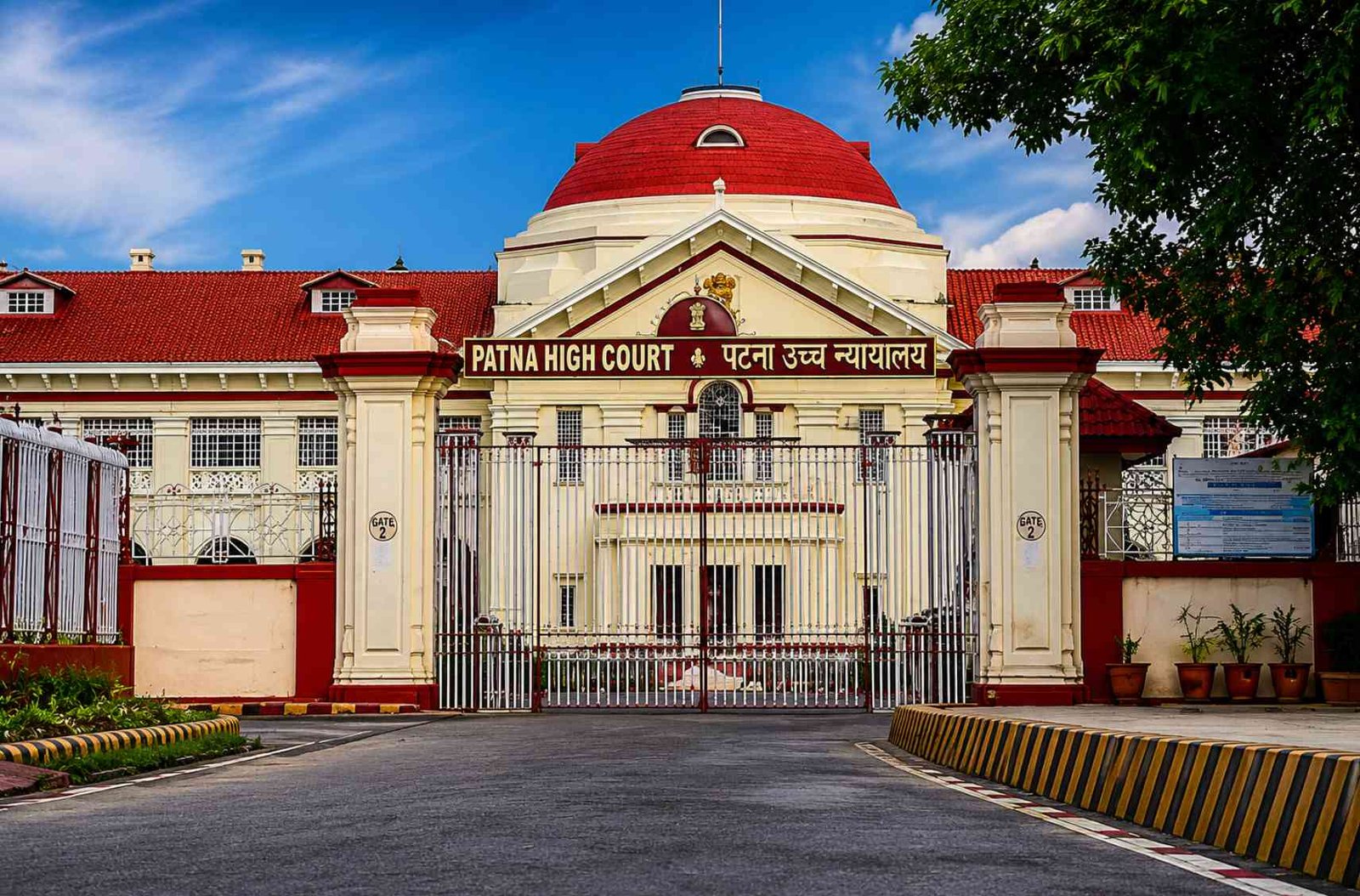
The Patna High Court has set aside the conviction of a studio owner who had been found guilty of attempting to commit rape and wrongful confinement, holding that the prosecution failed to establish the essential ingredients of an offence under Sections 376/511 of the Indian Penal Code (IPC).
Justice Purnendu Singh ruled that even if the prosecution version was accepted in its entirety, the allegations proved on record would, at best, constitute an offence under Section 354 IPC relating to outraging the modesty of a woman. Since the trial court had not convicted the appellant under Section 354 IPC, the High Court acquitted him of all charges and allowed the appeal.
Case Details
- Case Title: Himanshu Kr. Pathak @ Mithiya Pathak v. The State of Bihar
- Court: High Court of Judicature at Patna
- Bench: Justice Purnendu Singh
- Case Number: Criminal Appeal (SJ) No. 775 of 2013
- Judgment Date: July 9, 2026
The appeal challenged the judgment of the Ad hoc Additional Sessions Judge-I, Banka, who had convicted the appellant under Sections 376/511 and 342 IPC. The trial court had sentenced him to three years’ rigorous imprisonment with a fine of ₹5,000 for attempted rape and six months’ imprisonment for wrongful confinement, with both sentences directed to run concurrently.
According to the prosecution, the incident occurred on January 19, 2008. The informant had accompanied her father to Chhaya Studio at Amarpur for a photograph.
The appellant, who owned the studio, allegedly asked the victim’s father to remain outside to view the digital photograph on a computer before locking the studio door from inside.
It was alleged that he touched the victim, attempted to remove her salwar and tried to commit rape. On hearing her cries, her father pushed open the door, following which the appellant allegedly fled from the spot.
An FIR was registered the next day under Sections 342 and 376/511 IPC.
Evidence Before the Trial Court
The prosecution examined five witnesses, including the victim, her parents, a formal investigating officer and one independent witness who turned hostile.
The victim consistently stated that the appellant locked the studio, removed his own clothes, attempted to untie her salwar and sexually assaulted her with the intention of committing rape. During her deposition, the trial court recorded that she broke down while narrating the incident.
Her father supported the surrounding circumstances, stating that he heard his daughter’s cries, forced open the studio door and saw the appellant fleeing. The mother deposed about what she was told after the incident but admitted she was not an eyewitness.
However, the High Court noted several deficiencies in the prosecution case. The investigating officer who completed the investigation and filed the charge-sheet was never examined. Likewise, no doctor or medical officer was produced during trial, leaving the prosecution without any medical evidence.
Court Examines Law on Sole Testimony of Prosecutrix
Justice Purnendu Singh extensively discussed Supreme Court precedents governing convictions in sexual offence cases based solely on the testimony of the prosecutrix.
The Court referred to Krishan Kumar Malik v. State of Haryana (2011) 7 SCC 130, reiterating that the sole testimony of a victim can sustain a conviction only if it is wholly reliable, inspires complete confidence and is of sterling quality.
The judgment also relied upon Rai Sandeep v. State (NCT of Delhi) (2012) 8 SCC 21, where the Supreme Court explained the concept of a “sterling witness.” Quoting the decision, the High Court observed:
“The ‘sterling witness’ should be of a very high quality and calibre whose version should, therefore, be unassailable.”
The Court further referred to Ganesan v. State (2020) 10 SCC 573, reaffirming that corroboration is unnecessary where the prosecutrix’s evidence is wholly reliable.
Interested Witnesses Require Careful Scrutiny
The High Court observed that the father and mother of the victim were interested witnesses and their evidence required cautious appreciation. Referring to Nand Lal v. State of Chhattisgarh (2023) 10 SCC 470, the Court reiterated that while evidence of interested witnesses cannot be discarded merely because of relationship, it must be carefully scrutinized, particularly where corroboration is lacking.
The Court emphasized that convictions should rest upon credible and trustworthy evidence and not on testimony suffering from material deficiencies.
Non-Examination of Medical Officer
The judgment discussed the legal effect of not examining the medical officer. Referring to Rajesh Patel v. State of Jharkhand (2013) 3 SCC 791, the Court observed that non-examination of the doctor does not automatically destroy the prosecution case.
Nevertheless, the absence of medical evidence assumes importance where the prosecution seeks to establish an offence involving an attempt to commit rape.
The Court also noticed the defence reliance on Sadashiv Ramrao Hadbe v. State of Maharashtra (2006) 10 SCC 92, where the Supreme Court held that where the prosecutrix’s version is not of sterling quality and surrounding circumstances create doubt, the accused is entitled to the benefit of doubt.
Delay in Registration of FIR Explained
The appellant argued that the FIR was lodged after an unexplained delay of more than twenty-four hours.
The High Court rejected this contention. It noted the victim’s evidence that she and her family had first approached the police station on the day of occurrence itself, but the Station House Officer allegedly refused to register the case despite their waiting for several hours. The FIR was eventually registered on the following day.
Accordingly, the Court held that no adverse inference could be drawn from the timing of registration.
Distinction Between Attempt to Rape and Outraging Modesty
The central issue before the High Court was whether the acts alleged amounted to an attempt to commit rape or merely constituted outraging the modesty of a woman.
Justice Purnendu Singh held that there was no evidence of penetration, even to the slightest extent, nor any overt act unequivocally establishing an attempt to commit rape.
The Court observed:
“In the absence of any evidence of penetration, even to the slightest extent, or any overt act unequivocally constituting an attempt to commit rape, the ingredients of Section 375 IPC, and consequently Section 376 read with Section 511 IPC, are not attracted.”
The Court, however, found that the allegations demonstrated that the appellant had confined the victim inside the studio, attempted to remove her salwar and physically molested her by pressing her chest.
These acts, according to the Court, clearly satisfied the ingredients of Section 354 IPC relating to assault or criminal force intended to outrage the modesty of a woman.
The judgment categorically stated:
“At best, the allegations disclose an act intended to outrage the modesty of the victim, thereby attracting the ingredients of Section 354 IPC.”
Why the Conviction Could Not Be Sustained
Although the Court observed that the allegations would fall within Section 354 IPC, it held that the appellant had been tried and convicted only under Sections 376/511 and 342 IPC.
Since the prosecution had failed to establish the essential ingredients necessary for an attempt to commit rape, the conviction under Sections 376/511 IPC was found legally unsustainable.
Consequently, the conviction and sentence passed by the Sessions Court were set aside.
Final Directions
Allowing the appeal, the High Court acquitted the appellant of all charges. Since he was already on bail, he was discharged from his bail bonds. The Court further directed that any fine deposited by him be refunded and ordered the immediate transmission of the lower court records back to the trial court.
Follow Mahamana News For More Recent Judgments